 3:00
Set up your hospital in minutes
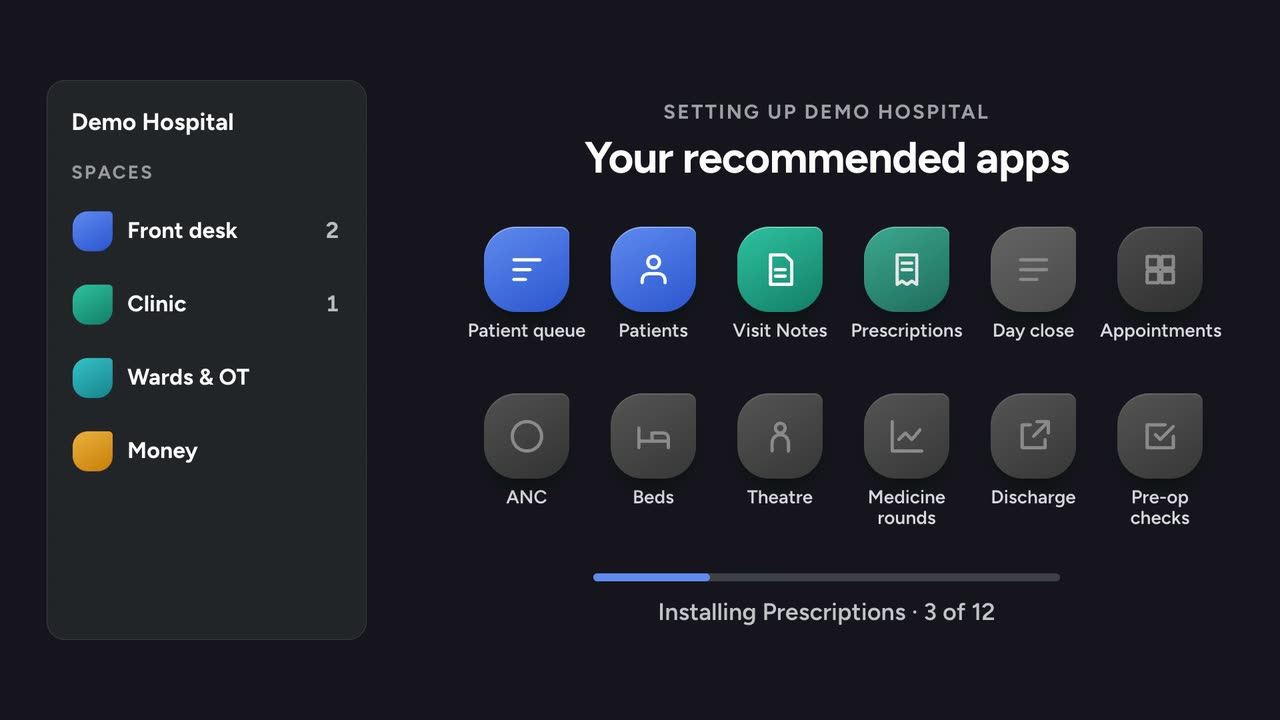
Three weeks before her hospital opens, Dr Meera sets up MedAppz at her dining table: no new password, a few questions, and only the apps she needs.
English, 3:00Follow Anjali through one day at a hospital on MedAppz: the front desk, her consult, the lab, the pharmacy, her bill, the wards and the owner's desk.
6:59EnglishCaptionsEvery clinic runs on a hundred small jobs. Booking. Reminding. Writing it all down. Chasing a report. Counting stock. Billing. Claiming. Paying everyone on time. Many clinics juggle a separate tool for each, and a lot of paper. And every job lands on someone who'd rather be looking after a patient. We're MedAppz. And we built one place for all of it. One patient record. One bill. One login for the whole team. And Rain, the AI that works inside every part of it. It's built like the app store on your phone. Every job is its own app. Install the ones you need today, and add more whenever you grow. Six hundred and sixteen apps, live, in one platform, all sharing the same record. For a doctor on their own, a clinic with ten doctors, or a hospital with three hundred beds. For labs, pharmacies, dental and eye clinics, IVF and dialysis centres, home care, and thirty-five kinds of healthcare business in all. And for fifty specialties, from cardiology and oncology to dermatology and paediatrics, each with its own pack of apps. Built so every read is recorded, every clinic's data is walled off, and nothing happens without a person's say. Let's follow one patient through one day, and meet the people who look after her. At the front desk, the phone never stops, and the waiting room keeps asking how much longer. Anjali booked last night on WhatsApp. She's already on today's board, in Dr Vikram's lane. One tap checks her in. She gets a token, and the waiting-room screen calls her when it's her turn. The desk sees every doctor, who's waiting, and what still needs doing. Nobody has to shout a name. For a doctor, the worst part of a consult is often the typing. And the one fear that never goes away: missing something. So Rain listens. As Anjali talks, a live transcript runs, with symptoms, how long, and medicines picked out. The note fills in, section by section. When you stop, the prescription and the orders are drafted. Here's the part that matters. Anjali is allergic to penicillin. Amoxicillin is a penicillin, so it's stopped. That check is a rule, not Rain. Nothing's saved until you accept it. When it reads right, one press signs the note and issues the prescription. In the lab, the fear is a critical result that sits in a pile while everyone's busy. Anjali's urine test moves along one line: ordered, collected, waiting to be checked, and acknowledged. When it's ready, the doctor who ordered it is told. A critical value goes straight to the top, and it stays there until someone owns it. And Anjali gets her report in plain words, reviewed by a clinician, after a quick check that it's really her. A pharmacist's two nightmares: running out, and finding it expired on the shelf. Anjali's prescription is already in the queue. Oldest first. Dispense it, and the stock moves with it. The earliest batch to expire is used first. And what's running low shows up before it runs out. Rain suggests a reorder from how fast you really use each medicine. You confirm it, and it goes out as an indent. For whoever handles the money, it's missed charges, bounced claims, and month-end panic. The bill drafts itself from what actually happened in the visit, tax on every line. A person checks it and finalises it. Anjali pays by UPI, straight into the clinic's own account. Insurance claims move on one board, from pre-authorisation to settlement. And when the month closes, the GST returns are ready. And for Anjali, the patient, it means no more chasing. Her medicines, her visits, her bills and her whole report are in her own app. She can book in four short steps, and pay by UPI. Her follow-up reminder is built to come on WhatsApp, which is where she already is. That's one patient's day. Now, the rest of the hospital. For a nurse at three in the morning, the fear is the patient who's getting worse, quietly. The bed board shows every bed at a glance. Medicine rounds show what's due, what's given, what's late, and which doses need a second nurse. Vitals feed the early warning score, NEWS2. At six, a doctor is asked to the bedside within thirty minutes, and the clock is right there on the screen. For HR, payroll mistakes are personal. Someone's rent depends on them. Payroll starts from real attendance. It takes off PF, ESI, professional tax and TDS, and makes every payslip. Then it waits for a second person to approve the run. And if you own the place, you can't be everywhere. You just want to know how today went. So ask. Tap the mic and ask Rain. She answers only from the reports you're allowed to see. Your home shows what Rain did today, and who confirmed each piece of it. And anything Rain did can be undone, for ten minutes. Ask her in English or Hindi, or in twenty other languages in beta, from Tamil and Bengali to Arabic and Spanish. And the screens themselves switch to Hindi, with a single tick. Step back, and here's how it all fits. Everything is an app. More than six hundred of them. Each one a Drop Tile, in the colour of its part of the clinic. Install a whole specialty pack in one go, or one app at a time. And every role gets its own home. Forty-seven of them, from the front desk to the pathologist. Everyone sees their own day. The fear with new software is months of setup, and a team that never uses it. Here, you tell it what you run, your specialties and your size. It recommends what you need, in three tiers, and tells you why. Sign in with Google, or with a code on WhatsApp. Getting started takes minutes. And then the big questions. Who's in charge of the AI? Who can see a patient's record? What if something goes wrong? You're in charge. Rain proposes, a person confirms. Nothing happens until someone does. Every clinic's data is walled off from every other, right down in the database. Every open, search and export is written to an audit trail that can't be edited, and it's checked every night. You decide what each role can see and do. Emergency access needs a reason, expires in four hours, and gets reviewed. Sign-in is strong, with two-factor and short sessions. Everything travels encrypted, and backups are checked every night. Patient consent is recorded by version, and messages stop when it's withdrawn. And you choose how much patient data Rain may use: off, redacted or full. Redacted strips the name, birth date, hospital number and phone before anything leaves our server. It's the default. It's built around India's DPDP Act, HIPAA, UK GDPR and the other laws our clinics work under. Each has a public page that shows what's in place, and what's still in progress. MedAppz. It takes the jobs. You keep the care. Try it as your own role, at medappz.com/demo.
3:00Three weeks before her hospital opens, Dr Meera sets up MedAppz at her dining table: no new password, a few questions, and only the apps she needs.
English, 3:00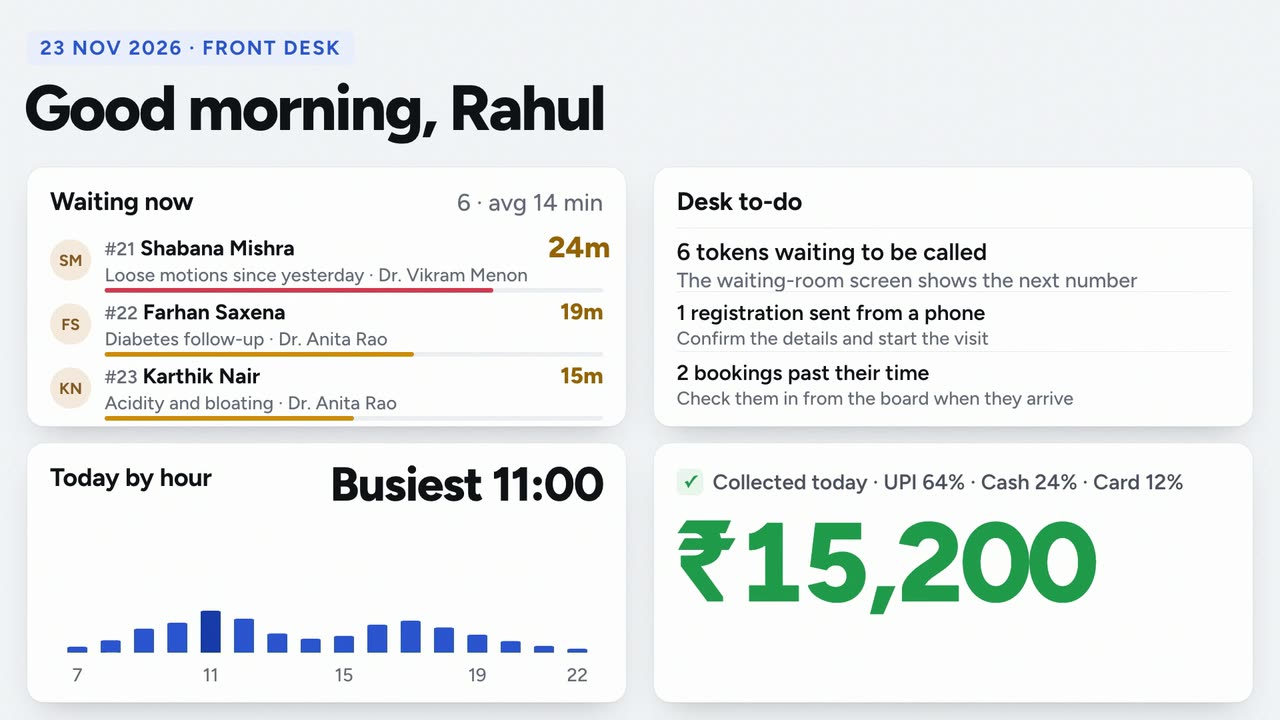 3:00
Rahul runs the front desk at rush hour: the whole day on one board, Anjali checked in from her WhatsApp booking, and a token on the waiting-room screen.
English, 3:00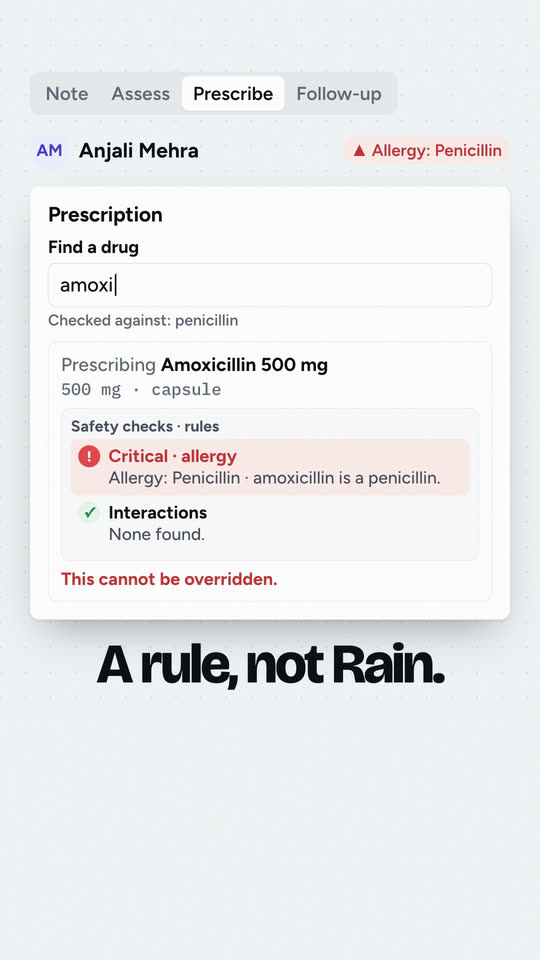 0:32
Dr Vikram listens to Anjali while Rain writes the transcript and drafts the note and prescription. A rule, not Rain, stops the penicillin.
English, 0:32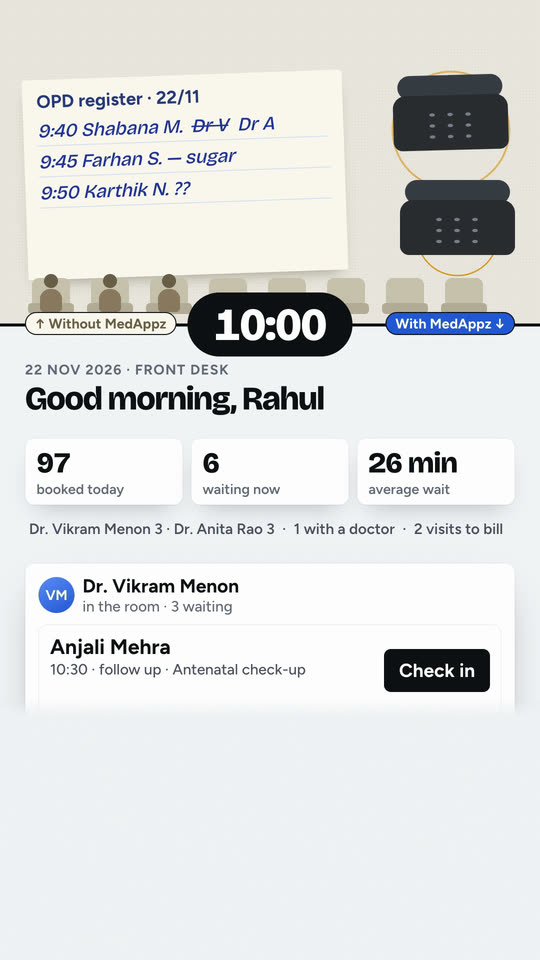 0:27
Ten in the morning: Anjali booked on WhatsApp last night, checks in with one press, and the waiting-room screen calls her. Hinglish captions.
English, 0:27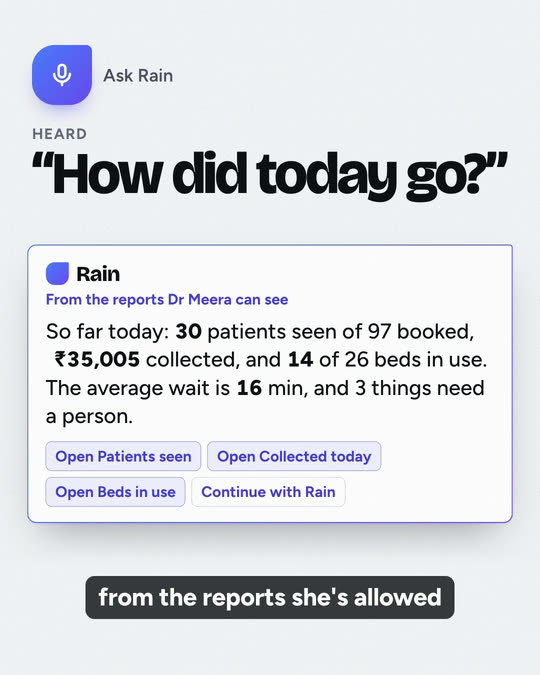 0:26
Dr Meera asks Rain how her hospital's day is going, then sees what Rain did today and who confirmed it. Anything Rain did can be undone for ten minutes.
English, 0:26The demo is the product in the video, with made-up patients. Pick your kind of care and a role; there is no form to fill.